A meeting that sets the pace of the project
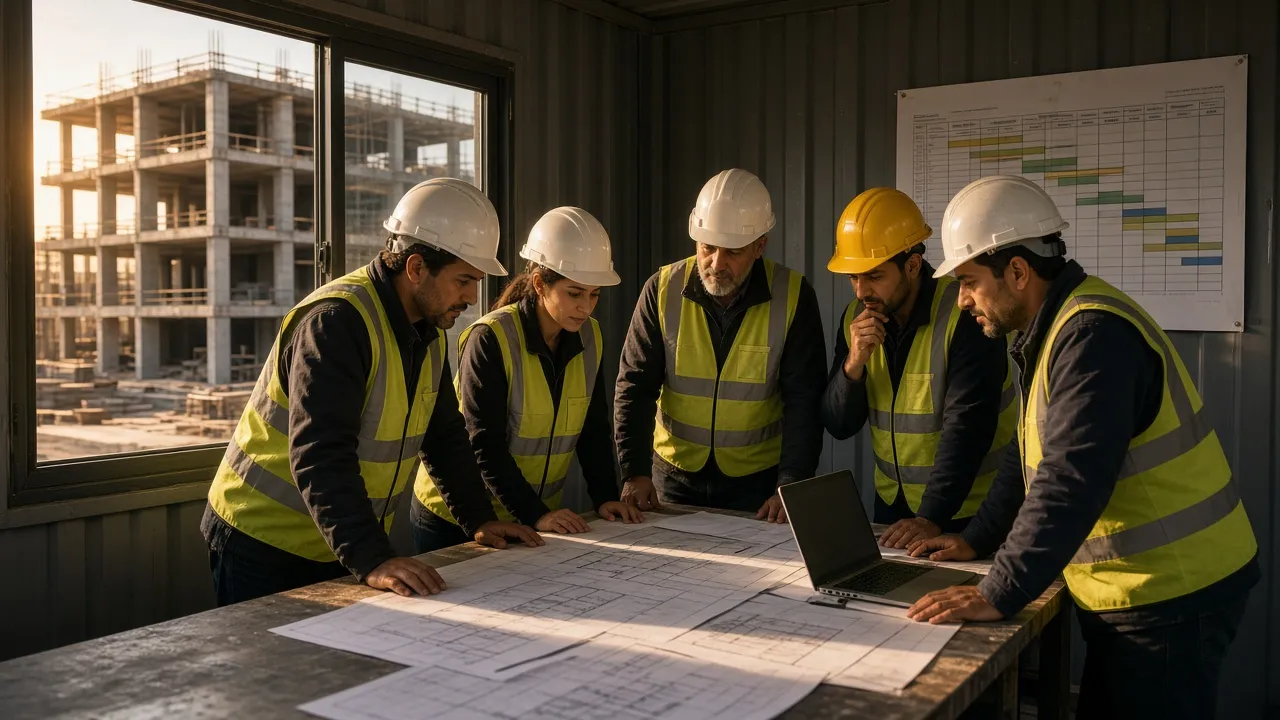
On most building sites, the site meeting takes place on a fixed date, often every week. It brings together around one table the project owner or its representative, the lead design team, the OPC and the contractors working on site. It is the moment to review progress, deal with problems and take the decisions that keep the site moving.
Yet many stakeholders picture long, scattered meetings where people talk a lot without deciding anything. An effective site meeting is not a matter of luck: it is prepared, facilitated and followed up. This article presents good practices to make it a real steering tool.
What is the site meeting for?
The site meeting has several complementary objectives:
- review the actual progress of the works against the schedule;
- identify technical difficulties, delays and blocking points;
- coordinate the work of the different packages, especially at interfaces;
- obtain the expected decisions and approvals, particularly from the project owner;
- follow up actions agreed at previous meetings;
- address health, safety and site organisation issues.
It is not meant to settle every technical detail. Topics requiring in-depth study are best dealt with in a dedicated meeting with only the people concerned, then briefly reported back to the general meeting.
Prepare the meeting well
An effective meeting starts before entering the room. Preparation relies on a few simple elements:
- An agenda circulated in advance, so everyone knows which topics will be covered and comes with the right answers.
- The up-to-date schedule, with the progress observed on site and the deviations identified.
- The list of open actions, taken from the previous minutes, each with an owner and a deadline.
- The right people: a representative from each contractor concerned, able to commit to dates and resources.
A site walk before or during the meeting is often very useful. Seeing progress on the ground avoids debates based on approximate information and allows problems to be dealt with on concrete evidence.
A clear, repeated structure
Keeping the same outline from one week to the next helps all participants. Everyone knows what will be asked and prepares accordingly. A possible structure:
- follow-up of actions from the previous minutes: done, in progress or overdue;
- overall progress and position against the schedule;
- review by package or zone: works completed, planned, difficulties;
- interfaces between packages and coordination needs;
- decisions and approvals expected from the project owner or the lead design team;
- safety, cleanliness and site organisation;
- schedule of works for the coming weeks.
This outline is not fixed: it must remain suited to the phase of the project. During structural works, discussions focus more on production rates and procurement; during fit-out, interfaces between trades become predominant; at the end of the project, clearing snags and preparing handover take over.
Facilitate: managing time and discussion
The meeting facilitator, often the OPC or the lead designer, plays a decisive role. They make sure the agenda is followed, give everyone the floor and refocus discussions when they drift. Setting a duration and sticking to it shows respect for participants, who also have a site to move forward.
Each topic must lead to a clear outcome: a decision, an action assigned to a person with a date, or a referral to a dedicated meeting. A topic discussed without conclusion will come back the following week, with an extra week of delay.
The facilitator must also foster a constructive climate. Problems are easier to solve when they are raised early and without fear. A meeting that looks for solutions is more useful than one that looks for someone to blame.
The minutes: the memory of the project
The meeting minutes are as important as the meeting itself. They record what was observed, decided and requested. To be useful, they must be:
- prompt: circulated within days, while the topics are still fresh;
- clear: organised according to the same structure as the meeting;
- actionable: each action states who owns it and by when;
- factual: they report findings and decisions, without interpretation.
Participants must be able to submit their comments on the minutes within an agreed time. Over the weeks, the set of minutes forms the history of the project, invaluable in case of disagreement or to understand the origin of a deviation.
Common mistakes to avoid
- holding the meeting without an up-to-date schedule, which makes it impossible to measure progress;
- letting detailed technical debates monopolise everyone’s time;
- closing a topic without a decision or a named owner;
- circulating the minutes too late, or not at all;
- not revisiting previous actions, which end up being forgotten;
- accepting representatives who cannot commit their company.
The role of OPC in site meetings
Within an OPC assignment (scheduling, project steering and site coordination), the site meeting is one of the main levers for action. The OPC presents progress against the construction schedule, highlights deviations and their consequences, organises interfaces between contractors and follows up on expected decisions. It drafts or contributes to the minutes and tracks the execution of actions from one meeting to the next.
This continuity is what turns a series of meetings into real project steering. To better understand the assignment, read What is an OPC in construction? and OPC or lead designer: what is the difference?
In summary
An effective site meeting relies on three stages: serious preparation with an up-to-date schedule and an action list, well-managed facilitation that leads to decisions, and prompt, actionable minutes. Run well every week, it becomes one of the best ways to avoid construction delays.
Discover our OPC services and our five-step method.