
The final stage, often the most delicate
After months of structural works, fit-out and finishes, the project nears completion. One decisive step remains: the handover of the works (réception). This is when the project owner confirms that the building is complete and agrees to accept it, with or without reservations. In Casablanca as elsewhere, this step determines the handing over of keys, the commissioning of equipment, the release of retentions and the start of warranty periods.
A poorly prepared handover often results in endless snag lists, contractors who have already moved on to other sites and weeks lost before the premises can be occupied. Well anticipated, it becomes a controlled formality instead. This article presents the key steps, from preparation to the clearing of snags.
What is the handover of works?
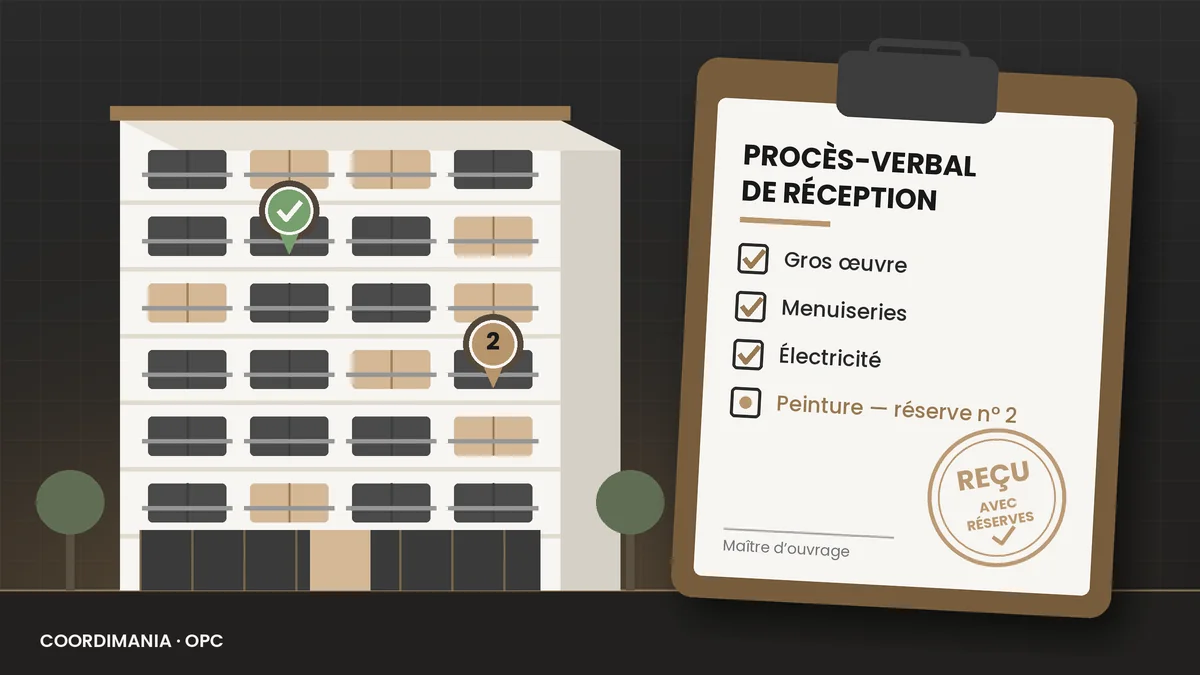
Handover is the act by which the project owner declares that it accepts the works carried out by the contractors. It takes the form of a handover certificate (procès-verbal de réception), usually drawn up after a joint inspection attended by the project owner, the lead design team, the OPC and the contractors concerned.
Three outcomes are possible:
- handover without reservations, when the building is compliant and complete;
- handover with reservations, when the building is substantially complete but certain defects or outstanding works are listed;
- refusal of handover, when the building is not fit to be accepted.
The precise terms (deadlines, warranties, retentions, required documents) depend on the contracts signed and the regulatory framework applicable to the project. They must be checked in the contract documents from the outset, not discovered at the end of the works.
Prepare handover well before the end of the works
Handover cannot be improvised in the last week. It is prepared several weeks in advance, in parallel with the finishes. A few actions make the difference:
- Set the handover date in the schedule and share it with all contractors, so that everyone organises the end of their works accordingly.
- Organise pre-inspections by zone or by package: inspect the apartments, floors or common areas as they are completed, and record defects while the teams are still on site.
- Prepare the tests and commissioning of technical installations (electrical, plumbing, air conditioning, lifts, fire safety) so that their proper operation can be verified.
- Compile the as-built file: as-built drawings, manuals, technical data sheets, test reports and maintenance documents.
- Clean and clear the areas, because an inspection on a cluttered site hides defects and distorts the findings.
These pre-inspections are the most effective tool for reducing the number of snags on the day. A defect spotted and corrected before the official inspection never needs to be recorded as a reservation.
Handover inspection day
The handover inspection must be methodical. The building is walked through zone by zone, room by room, following an order defined in advance. Each finding is recorded precisely: location, nature of the defect, package concerned. Dated photos usefully complement the description.
A well-written snag is a snag that is easy to clear. “Finishes to be redone” does not allow anyone to act; “apartment B12, bedroom 2: chip in the plaster to the right of the window, painting package” clearly states where to intervene and who must do it. The certificate summarises all the snags, the responsible contractors and the agreed deadlines for remedial work.
Clearing snags: a real steering task
Once handover has been granted with reservations, the hardest part sometimes begins. Teams have been scaled back, some contractors are busy elsewhere, and small remedial works easily slip down the list. Without rigorous follow-up, a snag list can drag on for months. To avoid this:
- draw up a single snag list, sorted by package and zone, shared with all parties;
- assign each snag an owner and a realistic deadline;
- schedule the interventions so that one trade does not damage another’s work;
- organise access to the premises, especially when they are already occupied or handed over to buyers;
- check each remedial work on site before declaring it cleared;
- review progress regularly, for example at the site meeting, until all snags are cleared.
The clearing of snags ends with a formal statement, which closes this phase and allows the final accounts to be settled under the terms of the contracts.
Common mistakes to avoid
- discovering defects on handover day for lack of pre-inspections;
- writing vague snags that cannot be assigned to a contractor;
- forgetting the tests of technical equipment or the as-built file;
- letting contractors leave without a remedial works schedule;
- not checking remedial works before declaring a snag cleared;
- keeping multiple snag lists in different files that end up contradicting each other.
The role of OPC in handover
In an OPC assignment (scheduling, project steering and site coordination), the end of construction is a phase in its own right. The OPC includes handover and pre-inspections in the construction schedule, coordinates the end of works between trades, prepares and organises the inspections, keeps the snag list up to date and follows up with contractors until snags are cleared. It assists the project owner and the lead design team without taking their place: the decision to accept the building belongs to the project owner.
To clearly distinguish the roles, read OPC or lead designer: what is the difference? and, for an overview of the assignment, What is an OPC in construction?
In summary
A successful handover relies on three stages: early preparation with pre-inspections by zone, a methodical inspection with precise snags, and rigorous follow-up until all are cleared. It is also one of the best ways to avoid construction delays at the very end of a project, when every week counts for delivery.
Preparing the delivery of a project in Casablanca? Discover our OPC services, our five-step method or contact us.